
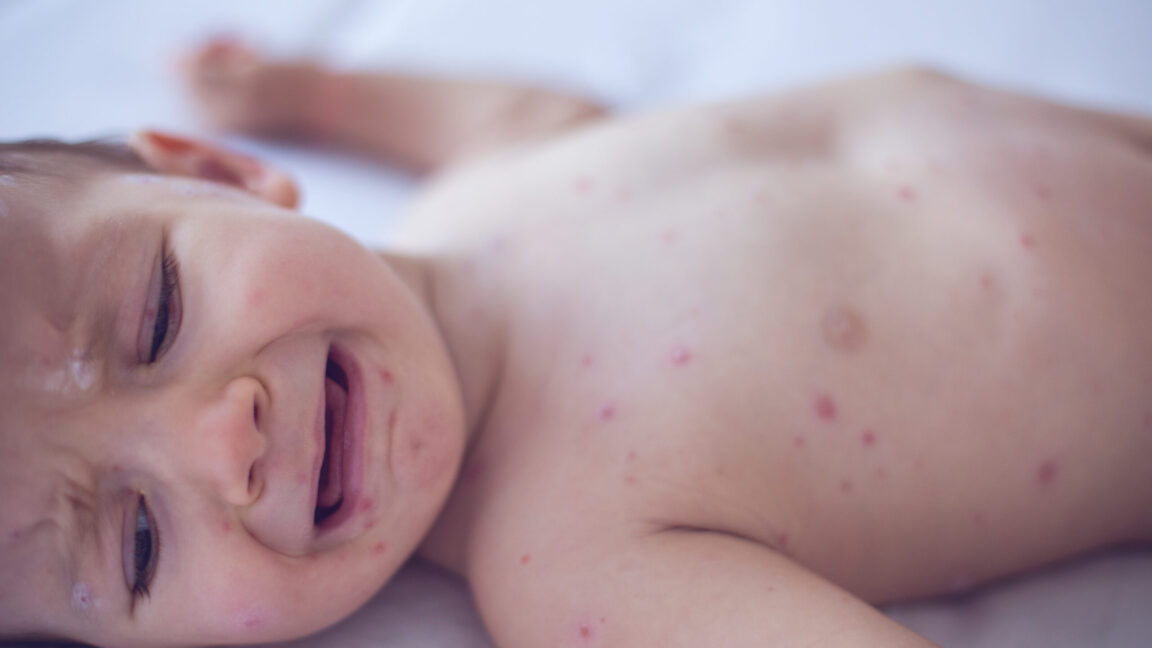
Pennsylvania’s health department issued a health alert Monday as cases of measles in pregnancy and, in turn, cases of congenital measles have continued to increase. Before the current outbreak—which continues to rage across the state—congenital measles cases hadn’t been seen in decades, the department noted in its advisory.
The alert included detailed clinical guidance for managing measles exposures and cases during pregnancy as well as cases in newborns. Many doctors have never seen such cases in their careers given the decades of successful use of the measles, mumps, and rubella (MMR) vaccine. But now, with vaccination rates slipping nationwide, the highly infectious virus is better able to get footholds in communities and spread rapidly through under-vaccinated pockets, as is happening in Pennsylvania.
As of October 19, Pennsylvania had reported 1,286 measles cases this year across 42 counties. Of those, 247 have been hospitalized, and six people have reportedly died (though the latest reported death is still pending an investigation by the state health department before it is added to the state tally).
The Pennsylvania health department did not immediately respond to a request for information from Ars Technica. But reporting from The 19th earlier this month put the number of measles cases during pregnancy at 53. At least one case of congenital measles led to a death; the first death reported in the current outbreak was in a newborn baby boy, who died immediately after birth while his mother was severely ill with measles.
Risky infection
Pregnant people who have not been vaccinated against measles nor previously had the infection are susceptible. A case of measles during pregnancy increases the risk of hospitalization, pneumonia, the need for oxygen support or mechanical ventilation, and death. It also increases the risk of miscarriage, stillbirth, low birth weight, and preterm labor. The MMR vaccine is not recommended during pregnancy because it is a live attenuated vaccine and poses a theoretical risk of causing an infection in a fetus. If a pregnant person is exposed to the virus, they’re recommended to receive intravenous immunoglobulin to help protect against infection—but only if it is given within six days of exposure.
If there’s a measles infection during pregnancy, the measles virus can pass to a fetus in utero or can transmit during or just after birth, leading to a congenital case. These cases can vary widely in symptoms and severity. Some babies will remain asymptomatic while others develop severe, multisystem disease and death. Some common symptoms of congenital measles include fever and jaundice. They can also develop the telltale measles rash, but it is sometimes delayed or atypical given a newborn’s underdeveloped immune system. Other symptoms can include low platelet counts, pneumonia, and neurologic complications.
Even if a newborn survives the acute infection, they are at risk of long-term complications. These include immune amnesia, a type of immunosuppression in which the measles virus destroys immune cells and adaptive responses. They are also at risk of subacute sclerosing panencephalitis (SSPE), a progressive, fatal neurological disorder that can strike years after an infection.
The alert warns that babies with congenital measles need long-term clinical follow-up and monitoring for these neurologic and immunologic complications, and parents need counseling on how to spot early signs of SSPE, which include seizures, regression in milestones, and academic difficulties in older children.