
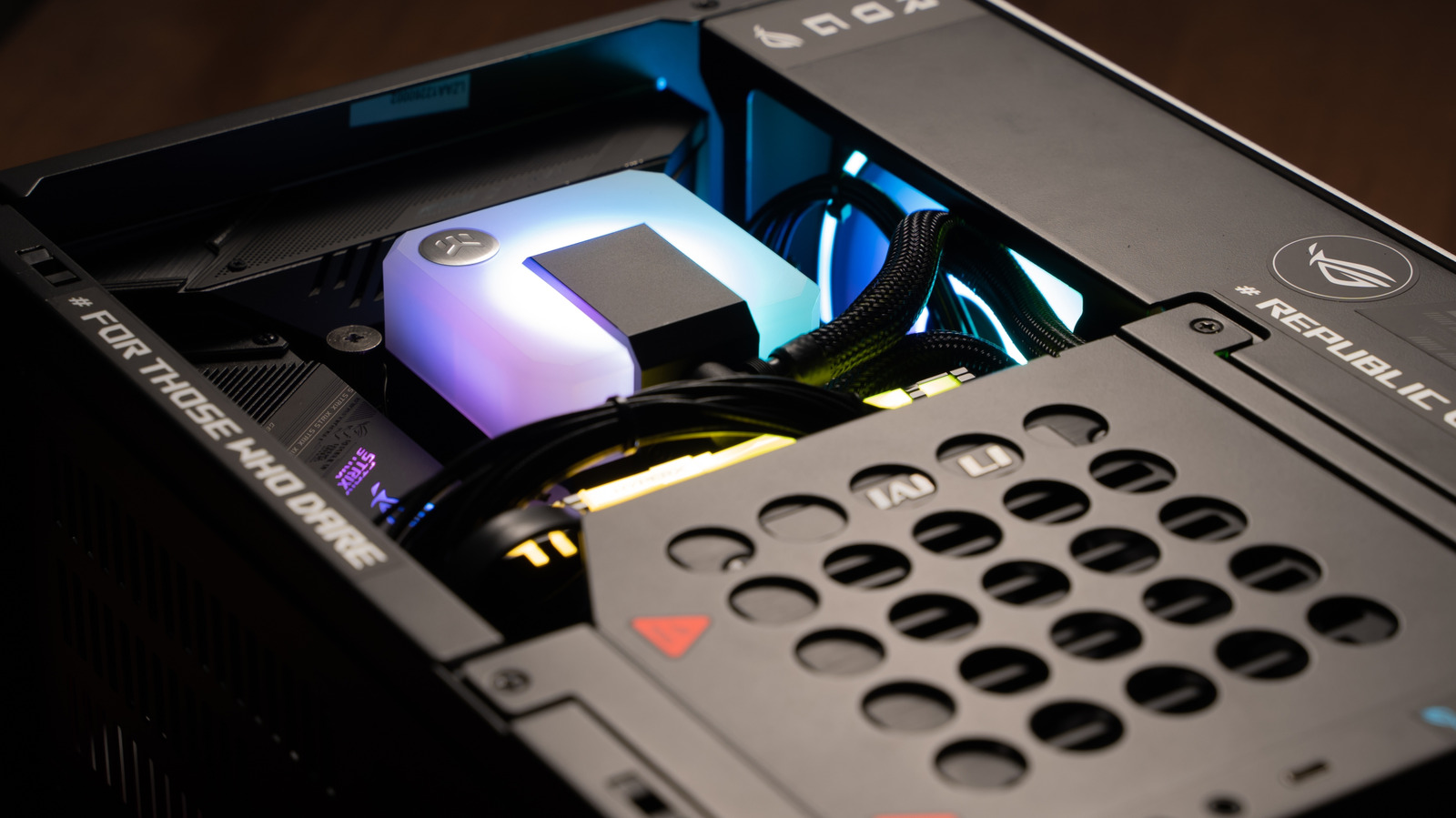
The unorthodox shape and size of a lot of mini PC cases means that while it's entirely possible to fill them with a lot of cool stuff, your approach is going to have to be a bit more economical and predetermined. For most of your situations, a mini ITX case will only accommodate a mini-ITX motherboard, while microATX cases will be able to fit in both Mini-ITX and microATX motherboards due to the micro cases being a bit bigger on average.
Airflow also becomes something of a problem, as the smaller size of these cases means your internal components have a lot less room to breathe. There's usually very little space once all the guts are mashed inside, and that's especially true if you go for a discrete GPU as opposed to an APU that combines the CPU and the GPU. The prices of most small form factor, or SFF, PC components are also a bit steep.
SFF power supplies, motherboards, CPU coolers and GPUs can all contribute a surprising amount to the final price of a machine, which may make going for a standard ATX build more appealing. Finding all these unique-sized parts isn't even the most challenging issue when building a mini PC, as the physical build itself can be far more difficult than that of a standard ATX machine.
There's a lot less room, but you also need to be more careful with the actual installation of parts. A standard ATX build can largely be put together in any order, but mini PC builds need to be put together in a specific order due to the part sizes and clearance concerns.