
Last week, international health authorities formally announced that the US had lost its measles-elimination status, meaning that the virus is once again endemic. But the official determination is a bit like getting the technical readout of a cracked dam while the country is already feet under water.
The national tally of measles cases is nearing 6,000 for the year, the highest count since 1991. Transmission is widespread, with 47 states and jurisdictions reporting cases. There have been 43 outbreaks this year, which account for 96 percent of the cases. Four states have case counts above 500, including Pennsylvania, which leads with 1,638 cases as of November 23. Nearly 650 people have been hospitalized nationwide. As of today, 14 people have died.
Deaths and transmission
On November 23, Pennsylvania’s health department announced its ninth confirmed death, an unvaccinated resident of Centre County. On November 24, Wisconsin reported its third measles death, an adult in Lafayette County. The report follows two other deaths in the state, an infant and a child. New York has also reported a death, which was of a 7-month-old baby. On November 20, Virginia reported the death of a child between the age of 0 and 4.
The virus isn’t slowing down. Measles is the most contagious virus known; it can linger in the air for up to two hours. Up to 90 percent of people who are not immune will fall ill after an exposure. People are considered immune if they’ve been vaccinated or previously infected. With slipping vaccination rates nationwide, the number of susceptible people is only growing.
To keep measles from getting a foothold in a community, vaccination rates need to be 95 percent or higher. According to the latest data, only 92.4 percent of US kindergartners were vaccinated with the measles, mumps, and rubella (MMR) vaccine in the 2025–2026 school year. Only 10 states have MMR vaccination rates at or above the 95 percent threshold. But even in those states, there are pockets and communities that are undervaccinated.
In Pennsylvania, which has the record for the largest measles outbreak this year so far, the epidemic curve appears to be past the peak. But Wisconsin seems to be in the thick of its outbreak. As of today, the state case count hit 920, with 88 cases reported since November 20. The health department has tallied 418 cases since the start of the month.
Measles infections
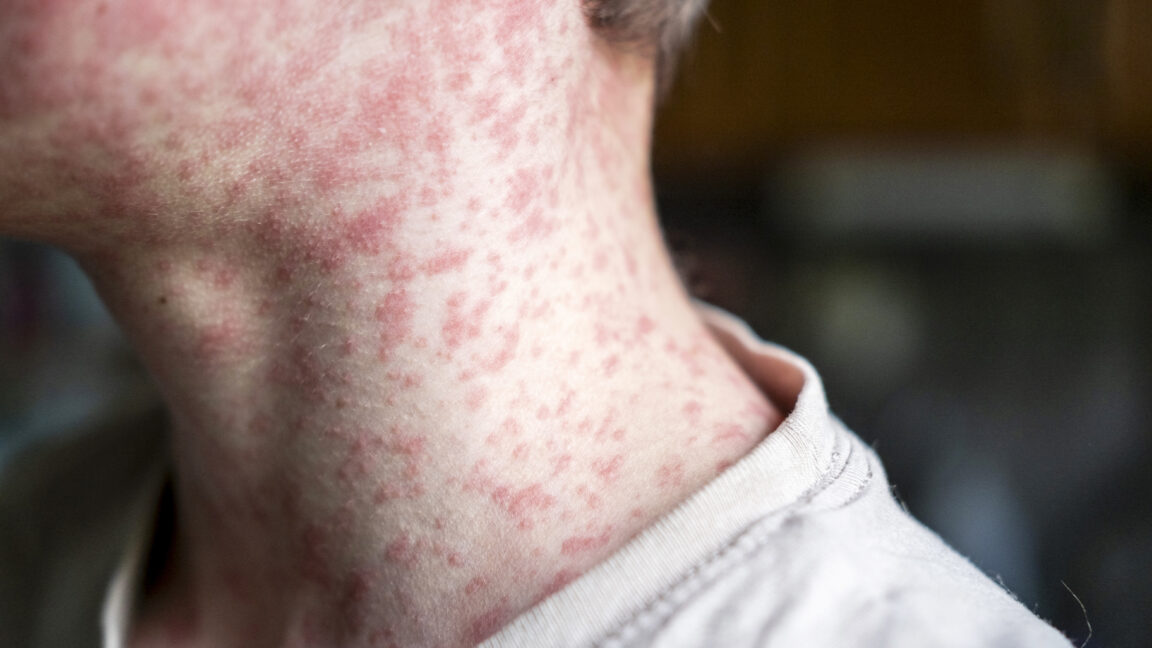
In most cases, measles causes high fever, a telltale rash, cough, runny nose, and watery eyes. But some develop complications, which can be severe and even life-threatening, including pneumonia and brain swelling, which can result in intellectual disabilities and hearing loss. In pregnant people, measles can cause more severe illness and pregnancy complications, including premature birth, low birth weight, and congenital measles.
After an acute infection, every person infected faces a long immune recovery in which they are newly vulnerable to a slew of other diseases. The measles virus specifically infects and destroys memory immune cells, which hold molecular records of germs the immune system has previously encountered and defeated. In other words, the immunity built up over the person’s life gets wiped, a phenomenon called immune amnesia. A study in 2019 estimated that the measles virus erases up to 73 percent of a person’s antibody repertoire, which would otherwise defend against infections and reinfections. To regain protection, people must be exposed to the germs again, either through reinfections or repeat vaccinations.
People who appear to recover are also at risk of subacute sclerosing panencephalitis (SSPE), a rare but devastating condition in which the virus remains in the central nervous system, striking years later to cause a progressive, fatal neurological disease.