
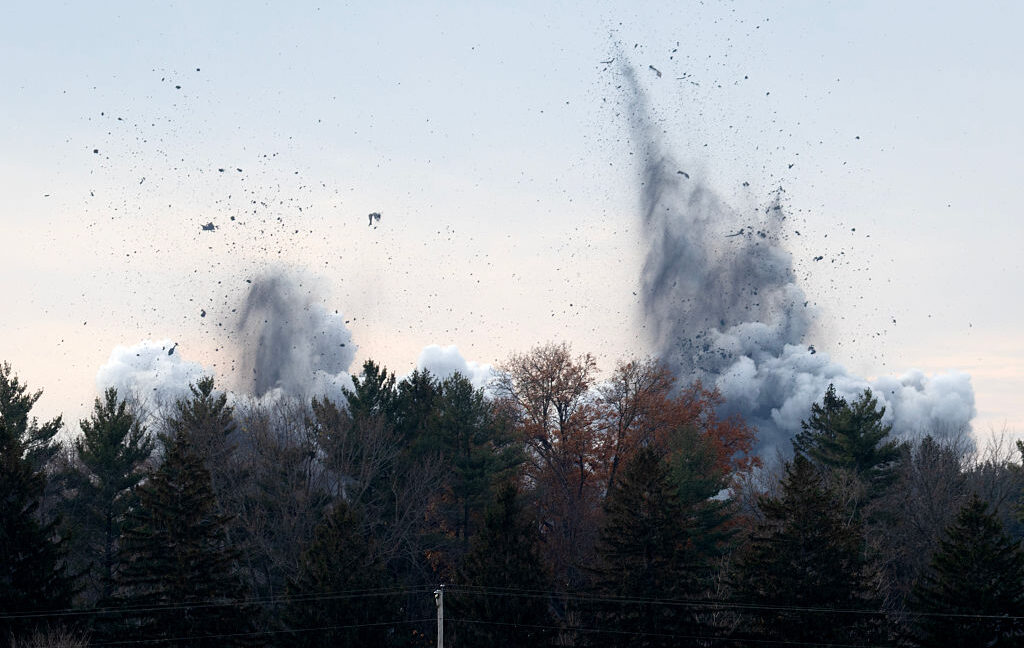
In a powerful explosion that launched gray-white clouds over southeastern Iowa, the Army detonated 68 barrels containing 9,700 pounds (4.4 tons) of degraded lead azide on Wednesday at about 9 am CT, preventing a spontaneous unmitigated explosion of the crystallized, highly unstable compound.
The detonation occurred at the Iowa Army Ammunition Plant (IAAAP) in Middletown, Iowa, a town of fewer than 400 people. Residents within a 5-mile area of the facility were advised to evacuate, while people farther out were told to shelter in place, close windows and doors tightly, turn off fans, and set indoor air systems to recirculate.
Local Iowa outlet KWQC caught the plume from the two earth-covered containers, which were detonated simultaneously. A KWQZ journalist, at a reportedly safe distance from the blast, said on the live broadcast that he could see and then feel the shockwave roll through the crop field in which he was standing. He put a mask on for the rest of the broadcast.
Lead is a neurotoxin that does not break down in the environment and poses significant health risks, particularly to young children and pregnant people.
In the hours leading to the detonation, the Army released maps showing modeled drift and distribution of the plume. They indicated that airborne lead would travel around 100 miles to the southwest of the facility, while dust deposition would cover around 200 square miles in that direction. Researchers and government workers have already collected air and soil samples from the area, which will act as baseline readings for lead levels in the aftermath and fallout of the detonation.
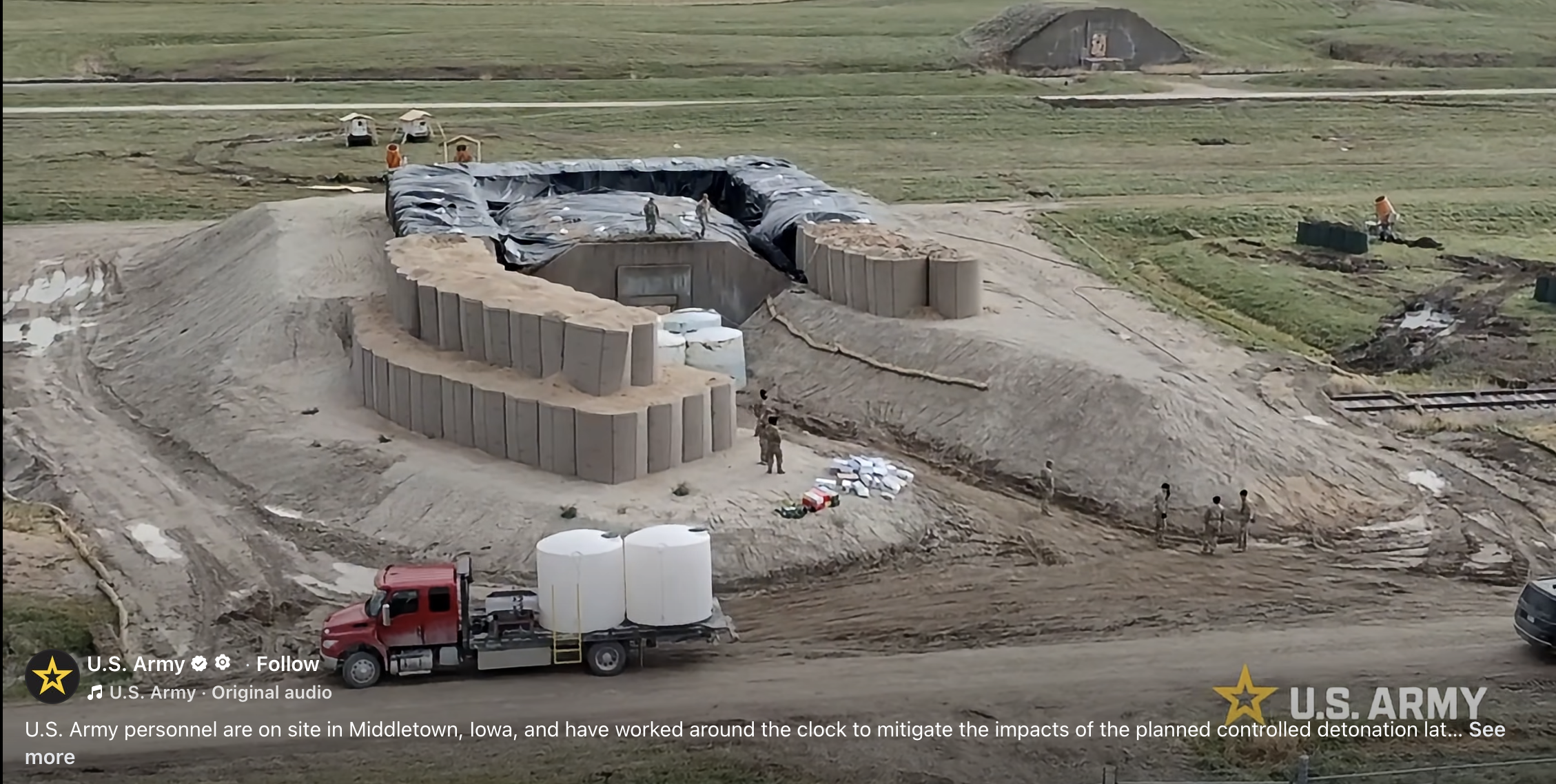
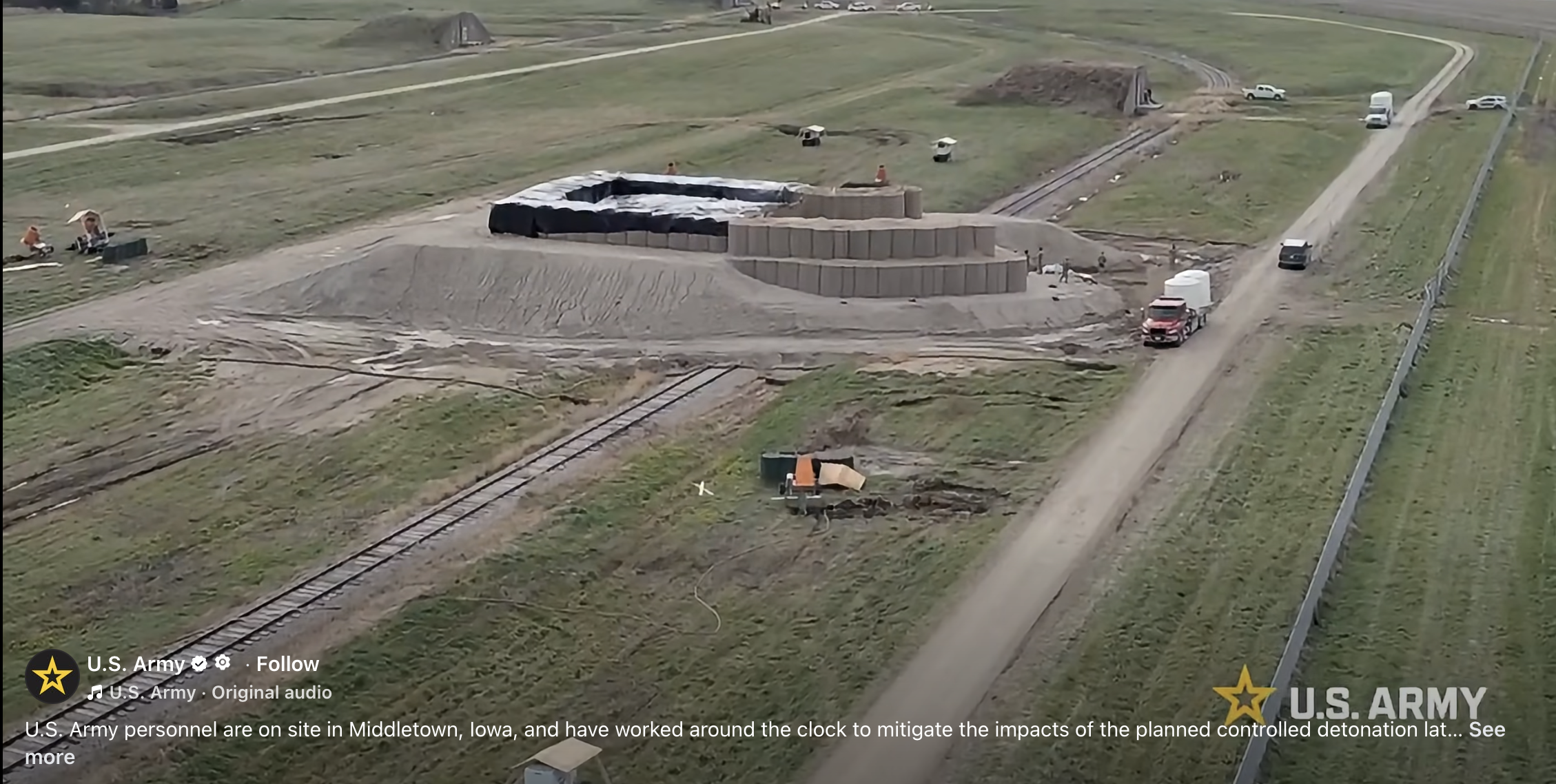
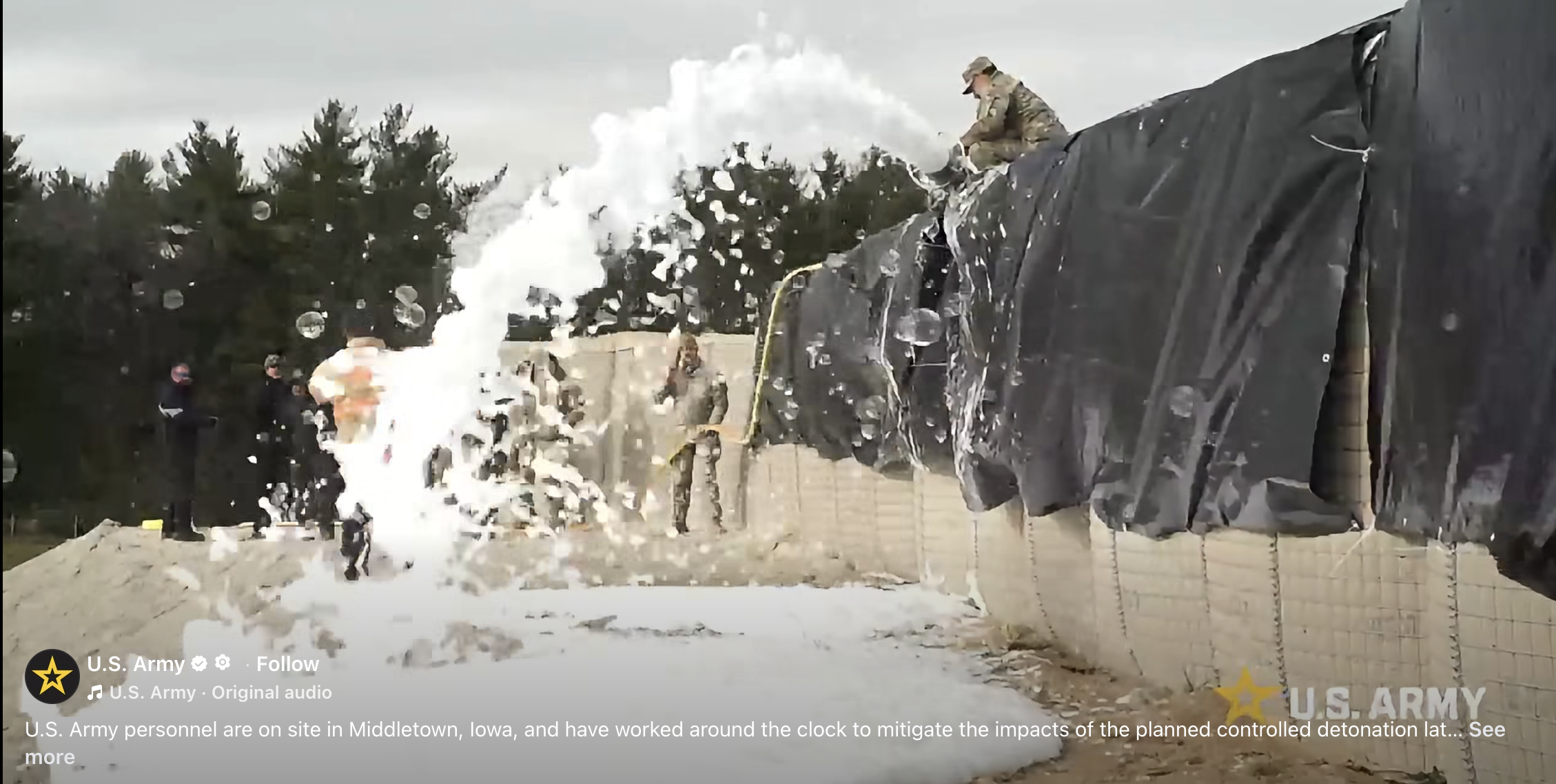
In preparation for the blast, the Army surrounded the earth-covered containers with sand-and lime fill. They set up water cannons and misters intended to keep dust down. They also covered the top of the container with fire-suppressant foam. The Army documented the efforts with a video posted to social media Wednesday morning.
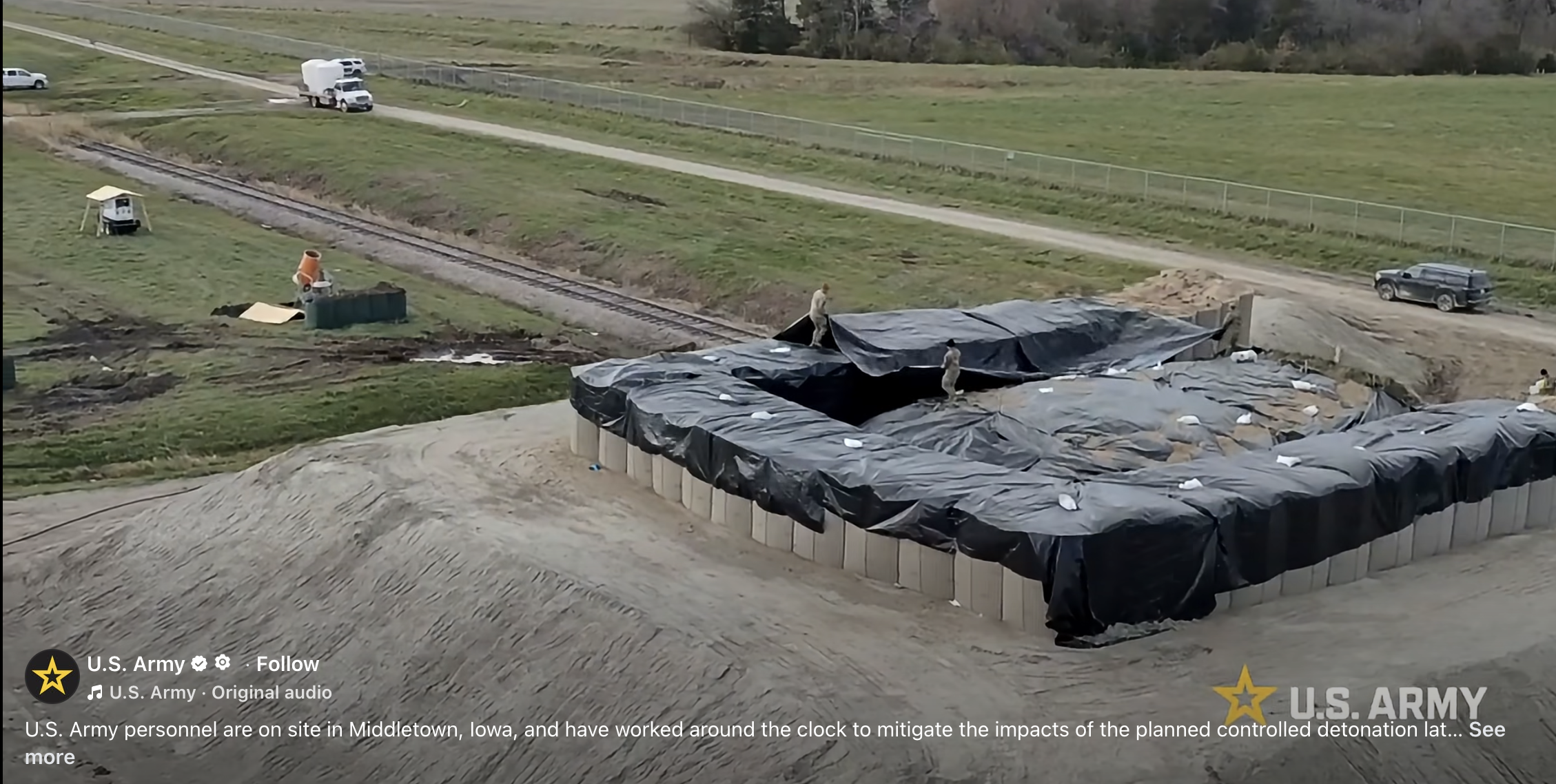
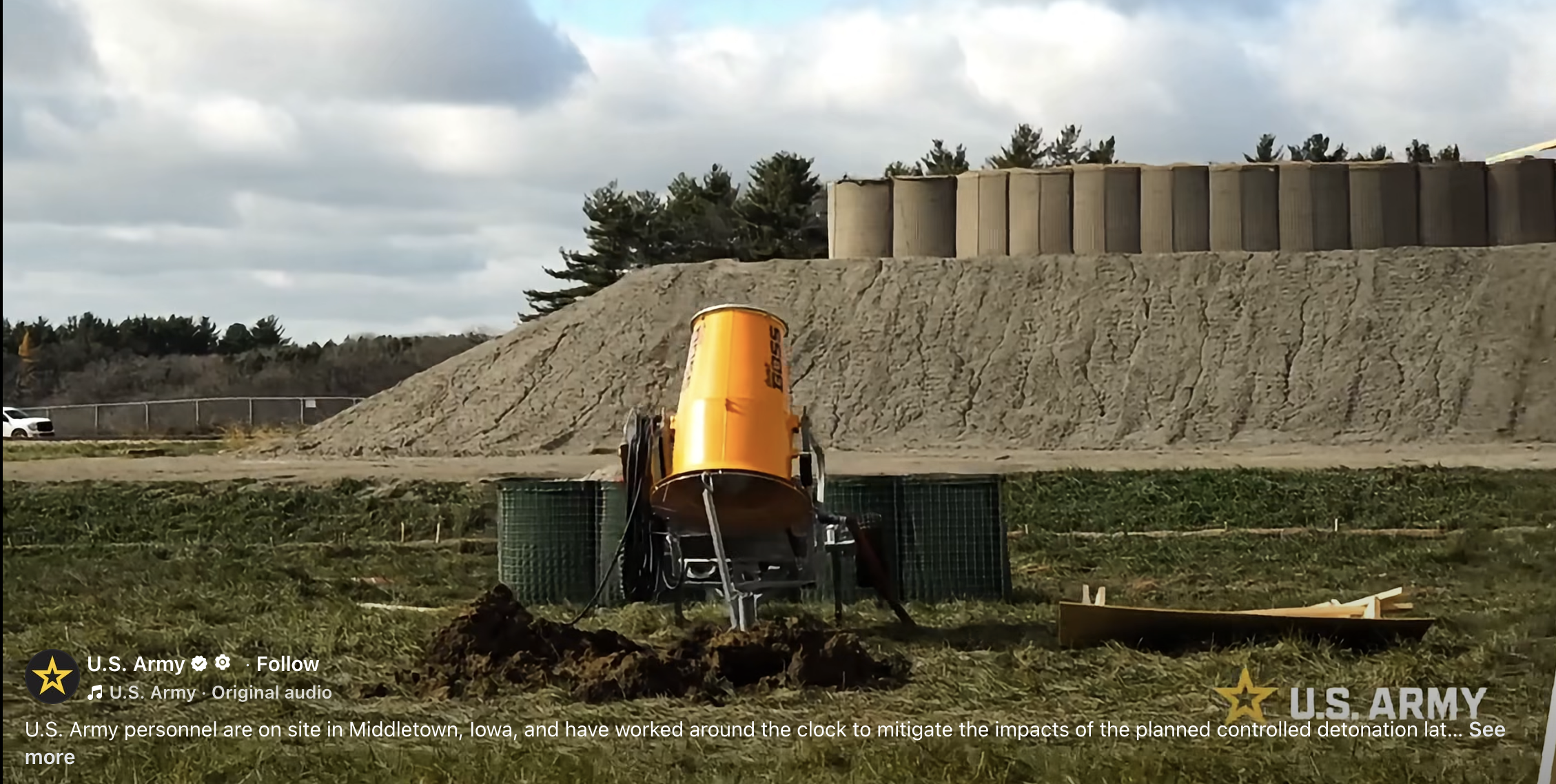
The explosion follows days of confusion, outrage, questions, and delays. Although the Army said that it has known about the hazardous state of the lead azide since March, Iowans were largely unaware of the situation and the planned detonation until last week. At that time, the Army had planned to detonate the barrels on Friday, November 20. But public alarm and an emergency court filing from environmental groups led to a delay, which was initially scheduled for Monday, then Tuesday, and finally to today.
A federal appeals court initially issued a stay on the Army’s permit to conduct the detonation, and, on Monday, Trump said he ordered the military to halt the operation until the court lifted the stay and Governor-elect Rob Sand, a Democrat, signed off. Ultimately, the court ruled this week that the Army could move ahead with plans, given no better option.
But questions continue to swirl about how the lead azide got to such a “catastrophically hazardous condition.” On Tuesday, The Washington Post reported that it had viewed emails that suggest the Army knew since at least September 2025, not this past March.