
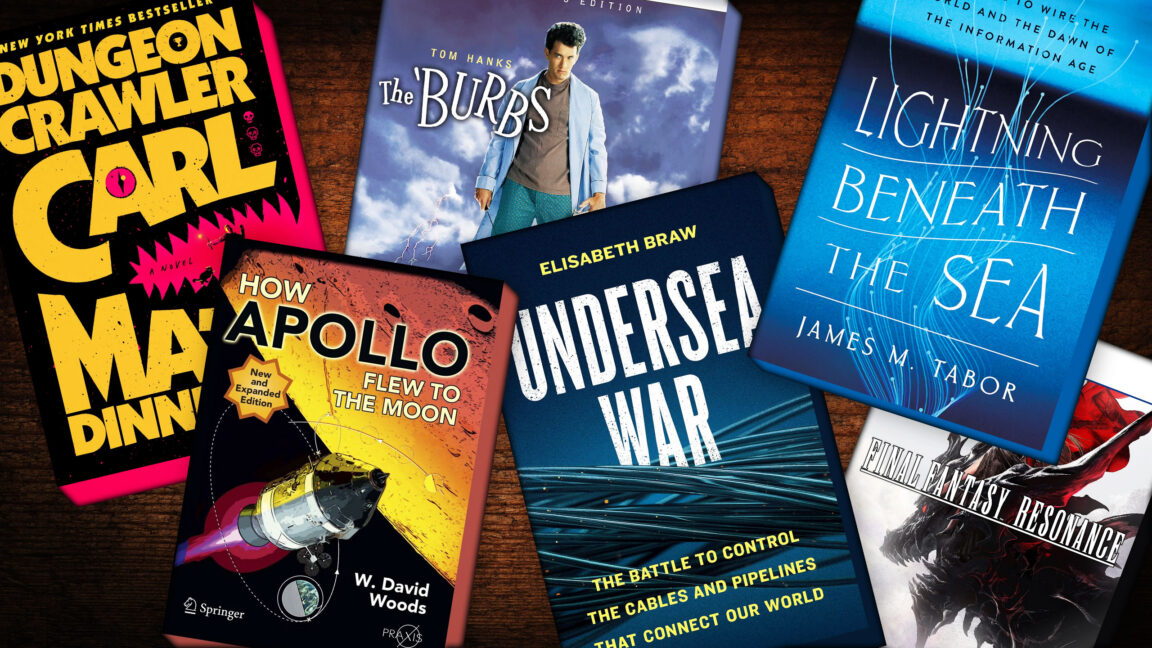
The holiday shopping season is upon us, and as is our custom, we’re here with a list of Ars staffers’ favorite recent purchases that could make good gifts. (Or maybe they might be a gift you get yourself!)
Rather than try to write a definitive “best gifts for your sister or brother” type of guide, we simply polled Ars staffers on stuff they’ve actually bought this year that they recommend. The thinking is that if we’re into it, hopefully some of you or your friends or family might be. As such, there’s no rhyme or reason to these selections, really; it’s just a list of stuff we bought that we’re happy about. It’s heavy on interesting books and cycling accessories, but there are some gadgets and the like in here, too.
For each gadget (or whatever else it might be), we have a brief description of how or why we’ve been using this particular thing and why we would recommend it. Our picks are ordered by price, from lowest to highest. Note, though, that the prices of these products are listed as they were when the list was written. Online retailers often adjust prices frequently, especially around Black Friday, so just a heads up: The price might be different by the time you read this.
Also, a callout to the Ars commentariat: If you have your own holiday buying recommendations, feel free to share them. We or some fellow readers might take your advice if you suggest something good! Happy holidays!
Under $100
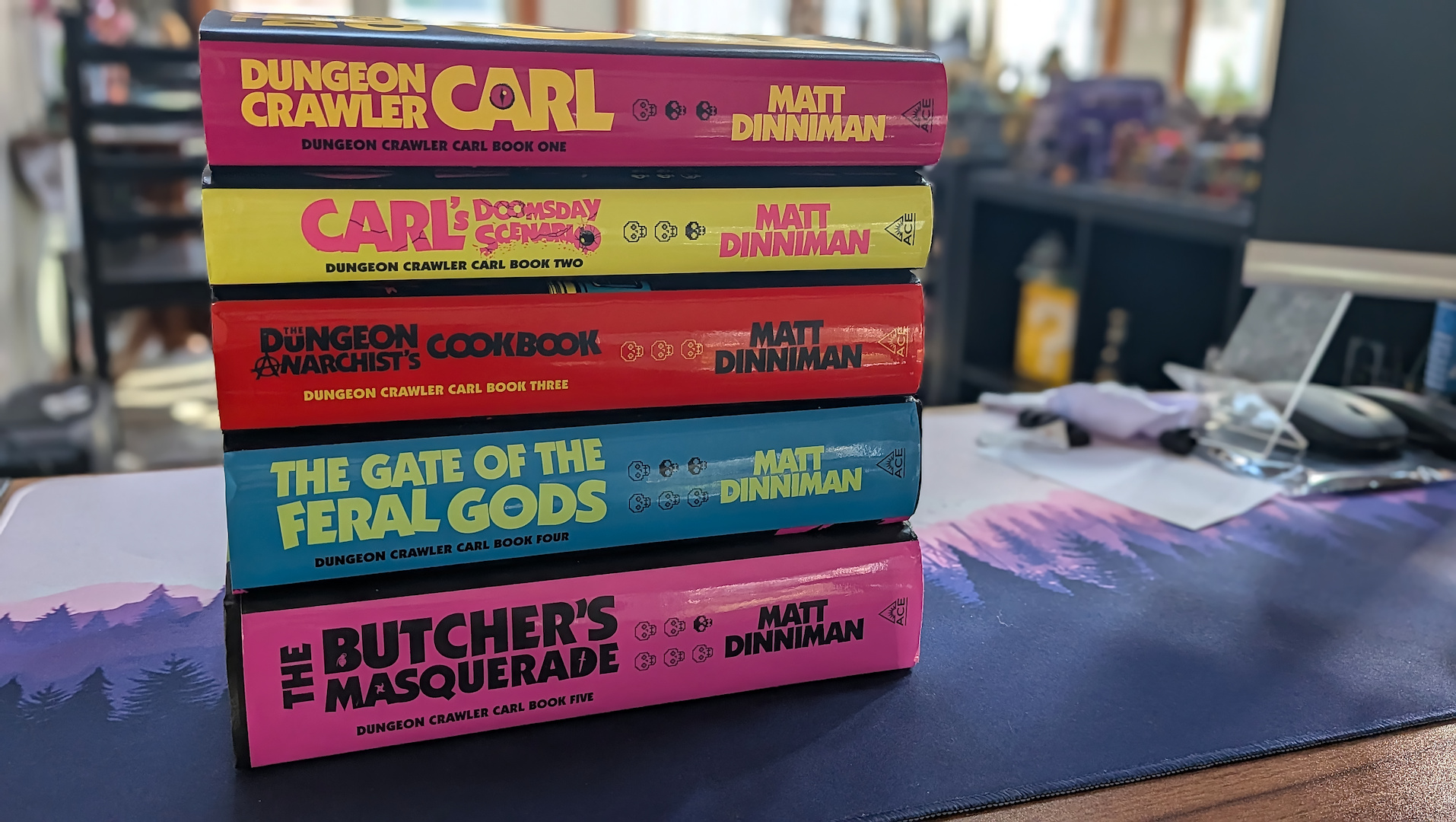
Dungeon Crawler Carl by Matt Dinniman – $13
I understand the convenience and space-savings that e-readers bring. My 2011 Kindle Touch goes with me everywhere I carry my travel backpack, but I’m still a softy for physical books when I’m sitting at home on a lazy Sunday. What started as something of a fanfic send-up of LitRPGs has quickly blossomed into a massive sensation of a series filled with far more depth, heart, and character than the initial premise might indicate. Author Matt Dinniman has an accessible style that will grip any reader with a taste for whimsical adventure. Just be warned that if you leave the books under the tree, you might not see much of the recipient until New Year’s.
– Nick Indge
Two excellent books that help describe how the Internet’s undersea backbone became a globe-spanning reality were published in 2026. Together, they form a great gift pairing for anyone interested in how humanity first achieved near-instantaneous communication across the world’s oceans—and how the first trans-Atlantic telegraph cable paved the way for a global network of subsea data cables that now faces growing risks from geopolitical conflicts.
James Tabor’s Lightning Beneath the Sea dives into the astounding real-life story of how American entrepreneur Cyrus Field, lacking in expertise but driven by personal fervor, set out to achieve peace on Earth by laying a 2,000-mile telegraph cable made of copper across the Atlantic seafloor in 1866.
To pull off the feat, Field managed to convince some of the greatest innovators and scientific luminaries of his day, such as Samuel F.B. Morse, Lord Kelvin, and Michael Faraday, to join his venture. He also refitted the SS Great Eastern steamship, the largest passenger liner ship built to date, as a cable-laying vessel.
That first ocean-spanning telegraph cable gave rise to more such cables for transmitting messages around the world. Eventually copper gave way to a network of subsea fiber-optic cables that became the Internet’s undersea backbone, and the modern world also became interlinked with submarine power cables and underwater pipelines for carrying oil and gas.
But all that undersea infrastructure is now facing growing danger from the threat of deliberate sabotage, as described in Elisabeth Braw’s book Undersea War. Her book provides a sobering but enlightening look at why subsea cables and pipelines are becoming more tempting targets amid rising geopolitical tensions and conflicts—and how governments and companies are responding to recent cable-cutting incidents around the world.
– Jeremy Hsu
Read Ars Technica’s Q&A with Elisabeth Braw about Undersea War.
The Burbs Collector’s Edition 4K Blu-ray – $32
It’s a little-remembered film for most people, but I absolutely love The Burbs. Sure, it’s more Halloween fare than Christmas, but last year I picked The Thing, so clearly “1980s movies for October” is my December viewing MO.

Starring Tom Hanks, Carrie Fisher, and Corey Feldman, this is a dry, hilarious send-up of suburban life with a horror-adjacent mystery that keeps you guessing. (It’s not scary, though.) I hardly ever hear anyone else talk about this movie, but I love it, and it only recently came out in 4K, so I’m taking this opportunity to shout it out.
– Samuel Axon
How Apollo Flew to the Moon by David Woods – $35
If you’re a technically minded Ars reader looking for a nice book to snuggle down with over the holidays, David Woods’ How Apollo Flew to the Moon could be just the thing. (There’s also an audiobook version.) Woods has an accessible style that breaks down complex engineering challenges and their solutions into easily digestible chunks that clarify without oversimplifying. He uses that style to take readers on a detailed trip through the machinery of Project Apollo, from the launch facilities and Mission Control all the way to the specific mechanics of how to navigate to and land on the Moon—and, from there, how to return safely to Earth.
Ever wondered about the insane engineering that let the Saturn V’s first stage burn almost 15 tons of fuel every second as it powered the crew into orbit? Or how to pinpoint a spacecraft’s centimeter-precise distance from Earth on its way to the Moon? Or how Apollo crews tracked their own position with stellar navigation, using sextants and star sightings? Or what a REFSMMAT is, or how television transmissions from the Moon worked, or how they got those crazy lunar buggies onto the Moon’s surface? All these questions and more are given beautifully complete and technically satisfying answers, suitable for both the curious layperson and also the interested engineer. Grab this book and stun your family at Christmas with amazing Apollo trivia—as a bonus, you’ll have the knowledge to make your “We never landed on the Moon!” conspiracy theorist uncle so angry that he stops talking and watches football in grumpy silence! Everyone wins!
– Lee Hutchinson
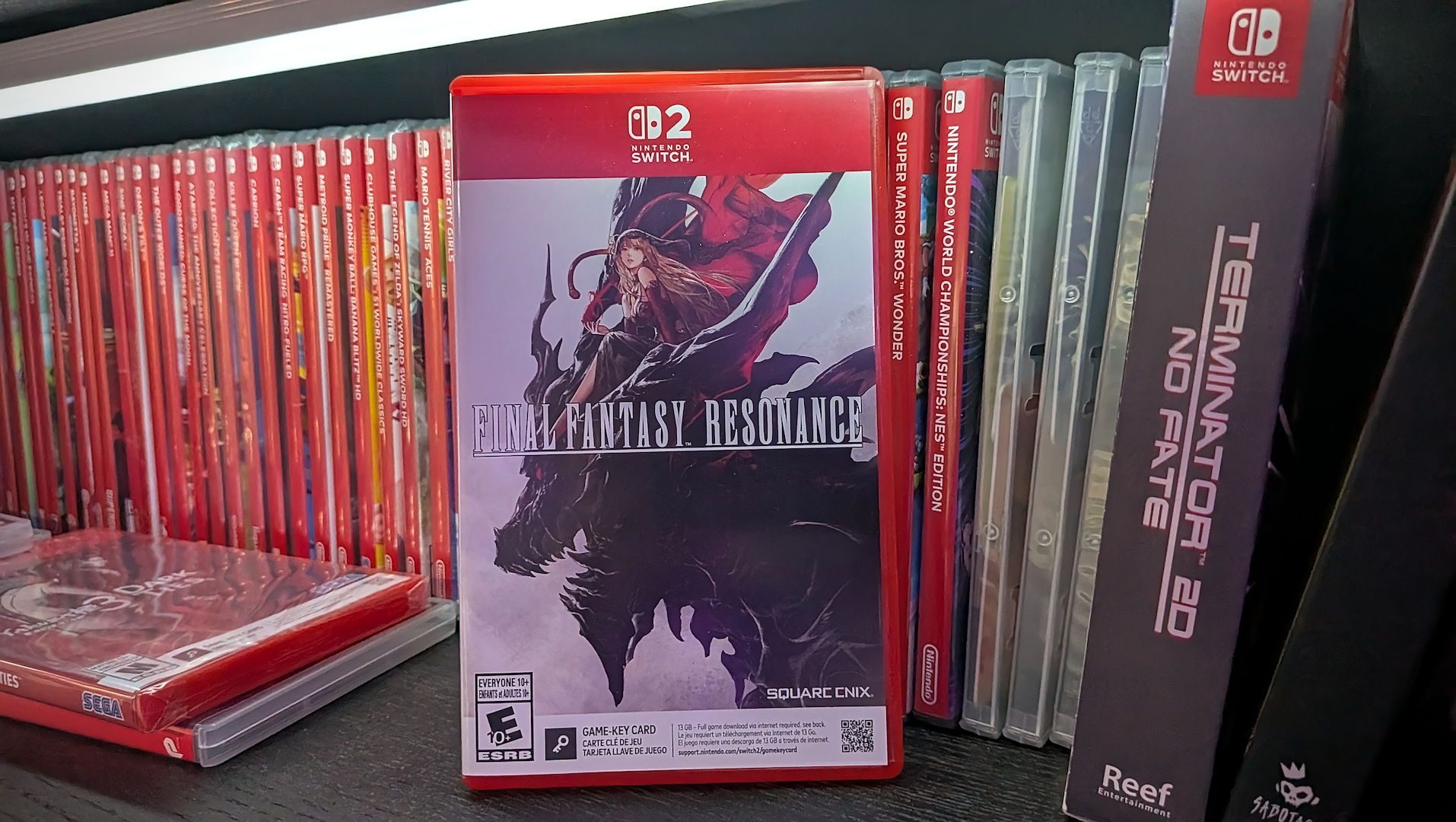
Final Fantasy Resonance
PS5 – $64
Switch – $50
Steam (Digital) – $50
Xbox (Digital) – $50
As someone who grew up in the classic era of 16-bit SNES RPGs, this 40th anniversary tribute to the series’ history is everything I could have ever wanted in a modern entry. I haven’t properly played through a Final Fantasy entry since the days of Final Fantasy X on PlayStation 2, but when friends kept nudging me that this was the perfect “Nick game,” I figured I should probably take a look. There’s a free six-hour demo available on supported platforms if you’re still on the fence about picking this one up, but don’t be surprised if you end up grabbing a copy for yourself.
– Nick Indge
Govee Star Light Projector (Nebula Effect) – $70
For the past couple of years, I’ve been transforming my tiny office into a sanctuary in the evenings, since I do most of my writing (and gaming) in here then. It started with Govee Hexa panels, then came an RGB TV backlight, then colorful smart bulbs for the built-in light fixtures. I topped it off with the Star Light projector, which coats the ceiling in a soothing, ever-shifting, immersive stars-and-nebula effect.
It’s probably not for everybody, but my office is tiny, and I spend a lot of time here both for work and for fun. Tapping a button to completely shift the vibe is surprisingly effective at making it a room I don’t mind spending time in even after I’ve been working in it all day.
– Samuel Axon
M-Vave FM-1 – $84
Easily my favorite impulse purchase of 2026, the FM-1 is a great gift for curious tinkerers and experienced musicians alike. At around $70 or less, you don’t have to break the bank to get fiddling. A perfectly decent stock synthesizer on its own, the real fun starts when you begin experimenting with the community firmware packages that transform the synth into anything from a multi-track groovebox to one of the more hilarious ways that I’ve ever tried to play Doom.
– Nick Indge
Under $300
Trek BellBeats digital bike bell and speaker – $125
One of the great things about cycling is the chance to be alone with my thoughts—just me and my bike. But that can be too much of a good thing on longer zone 2 rides and centuries. Sporting the size and shape of an old-school bicycle bell, the Trek BellBeats is a safer alternative to donning headphones while on the bike.
BellBeats pair with your phone via Bluetooth and will play music at a volume loud enough to enjoy your tunes or hear navigation prompts, but they are not so loud that the music drowns out traffic (or the radar on your bike computer). They can be mounted on just about any non-aero handlebars, charge over USB-C, and offer up to six hours of playtime. And as a bonus, they double as a bicycle bell.
– Eric Bangeman
Fractal Design Scape – $160
I use Bluetooth headphones most of the time, but frustratingly, they don’t work with voice chat on the PlayStation 5, and I needed a good-quality headset for my Friday night multiplayer gaming sessions.
I’ve always liked Fractal Design’s PC cases, so I decided to roll the dice on their affordable-for-the-quality, over-ear headphones. They support Bluetooth, but they also have a USB dongle, so they can be used for voice chat on game consoles, too.
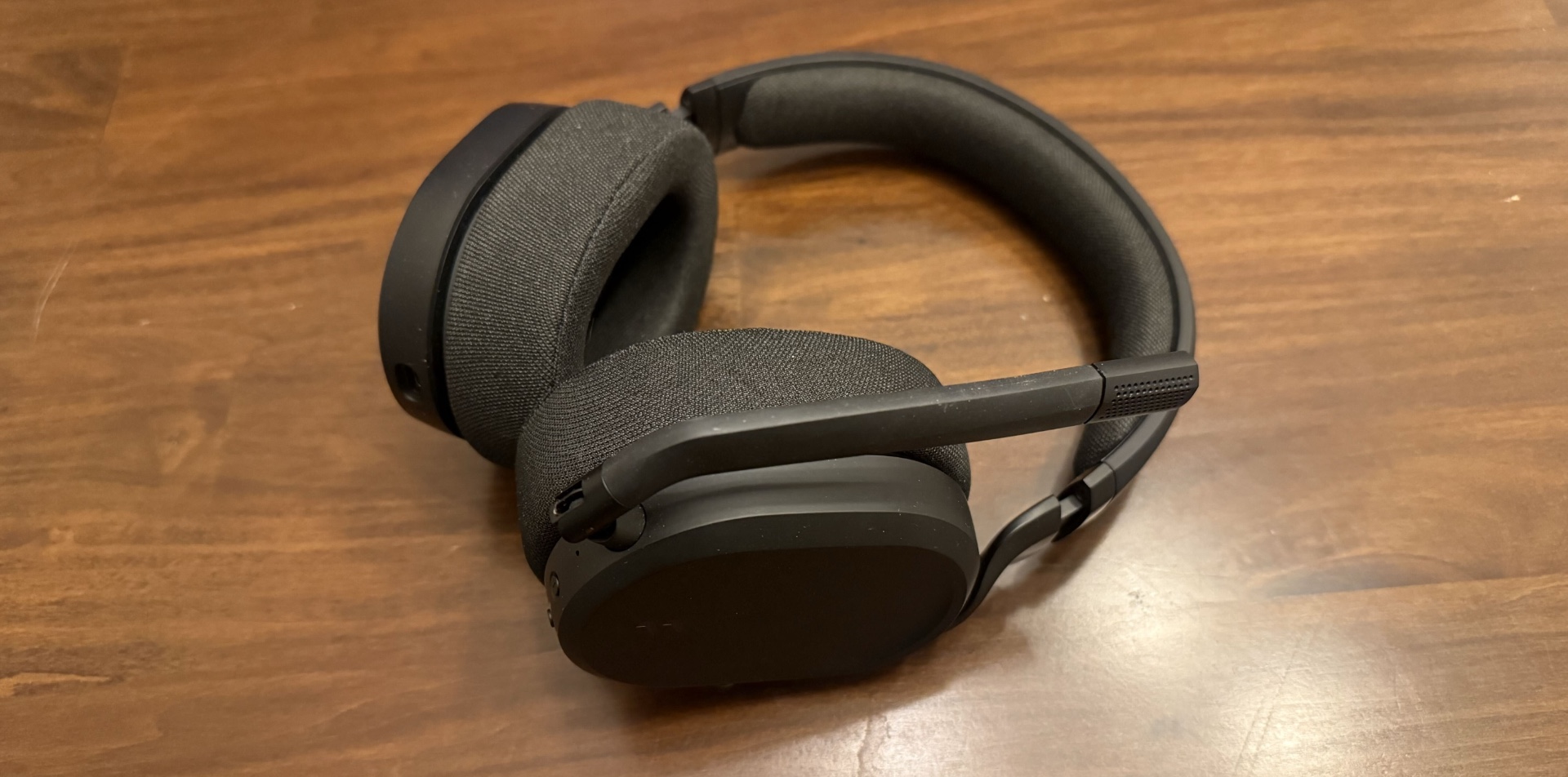
I was surprised by how much I like them, and despite buying them just for the PS5, I’ve ended up using them in other contexts. Part of that is because they’re very comfortable, and the design avoids my glasses frames well.
I also like that, although they are gaming headphones with all the expected bells and whistles for that, they don’t have an over-the-top design.
If you’re in the market for mid-range wireless gaming headphones that look like something you could actually wear in public without embarrassment, these fit the bill so far.
– Samuel Axon
Povec C1 Performance Sunglasses – $250
Photochromic sunglasses are incredibly useful for outdoor workouts. Two of the most popular bike trails near me run through forest preserves, and the lighting changes steadily as the forest canopy closes in or spreads out. My default sunglasses are a cheap, $28 pair from Rockbros.
Unlike other photochromic glasses, which change tints via a pokey chemical reaction, the Povec C1 uses a battery to switch between tints in a second. All the rider (or runner) needs to do is swipe the right temple and the lenses will darken or lighten almost instantaneously. The C1 charges via a small USB-C port, and the Povec claims 28 days of battery life with four hours of daily usage. I’ve used them off and on for about six weeks and have only had to charge them once.
The C1 comes in three frame colors and either Green Revo or Gold Revo glasses and is an excellent stocking stuffer for the runner, cyclist, or skier in your life.
– Eric Bangeman
$300 and over
Garmin Varia RCT715 radar camera tail light – $300
Last spring, a friend of mine was the victim of a hit-and-run while on a ride. Although she wasn’t seriously hurt, her brand-new bike was totaled. The driver got an unwelcome surprise a couple of days later when the police knocked on his front door and arrested him. My friend was riding with a Garmin Varia RCT715, a combination taillight and radar with a camera. The 1080p/30 fps camera captured the car’s license plate, making it possible for the police to identify the driver.
More than 90 percent of my riding is on roads, and I don’t feel fully comfortable without my Varia. I have it paired with my Garmin Edge 1050 bike computer, but it will work with most other brands via ANT+. The Varia detects approaching vehicles at 140 meters, and I have it set to record video starting when a car is detected and for 30 seconds after it passes. Battery life is up to six hours, depending on whether the taillight is solid or flashing, and video is saved on a 16GB microSD memory card.
– Eric Bangeman
Hiplock DX1000 Bike Lock – $380
My YouTube algorithm has recently fed me videos of testers using an angle grinder to cut through decent bike locks in under a minute. I’ve never seen an angle grinder-assisted theft in person, but I’ve seen enough heaps of bike parts around town to know people’s rides are getting jacked somewhere. As someone known to be neurotic about leaving my bike outside my purview, I’m looking for added security measures to ease my stress.
Enter the Hiplok, which, according to the tests I’ve watched, will turn multiple angle-grinder blades to dust. Do bike thieves carry several discs, and will they spend about 15 minutes trying to break this lock? I don’t know, but I have my doubts. At nearly $400, it’s about as expensive as it gets to secure your ride, but when your bike tops $5,000, it’s probably worth the added theft deterrence and peace of mind.
– Jacob May
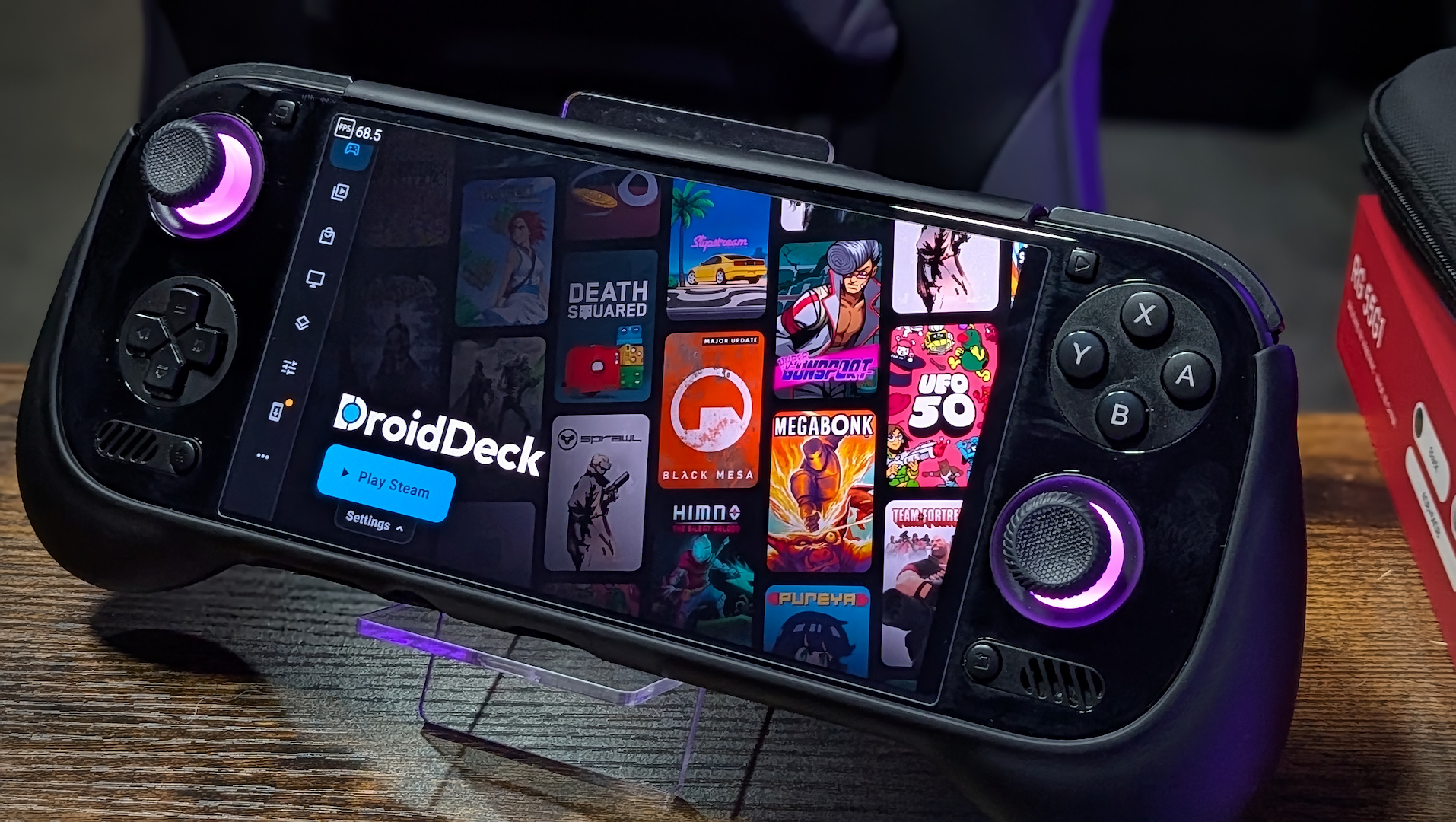
AYN Odin 3 – $767
Santa left this one last year, and the rest of my handheld collection has felt neglected since. Sporting a Snapdragon 8 Elite (now dubbed the Dragonwing Q8) chip, excellent ergonomics, and a 6-inch 120Hz AMOLED screen, it’s the perfect balance between size and horsepower. The Android unit is capable enough to play most anything you can throw at it, without the bulk of a Steam Deck or the bloat of a Windows handheld. Thanks to things like Proton, FEX translation, and software like DroidDeck or GameNative, there isn’t much I can’t use it for. Streaming consoles or PC gaming? Check. Access to Steam, GOG, Epic, Rockstar libraries? Check. High-end native Android gaming? Yup. Emulate anything under the sun? You’re covered there, too. The latest Odin 3 Portal hardware revision gets a larger 7-inch screen and a base RAM configuration of 12GB over the original model’s 8GB. I may have to ask Mr. Claus about an upgrade…
– Nick Indge
Ars Technica may earn compensation for sales from links on this post through affiliate programs.