
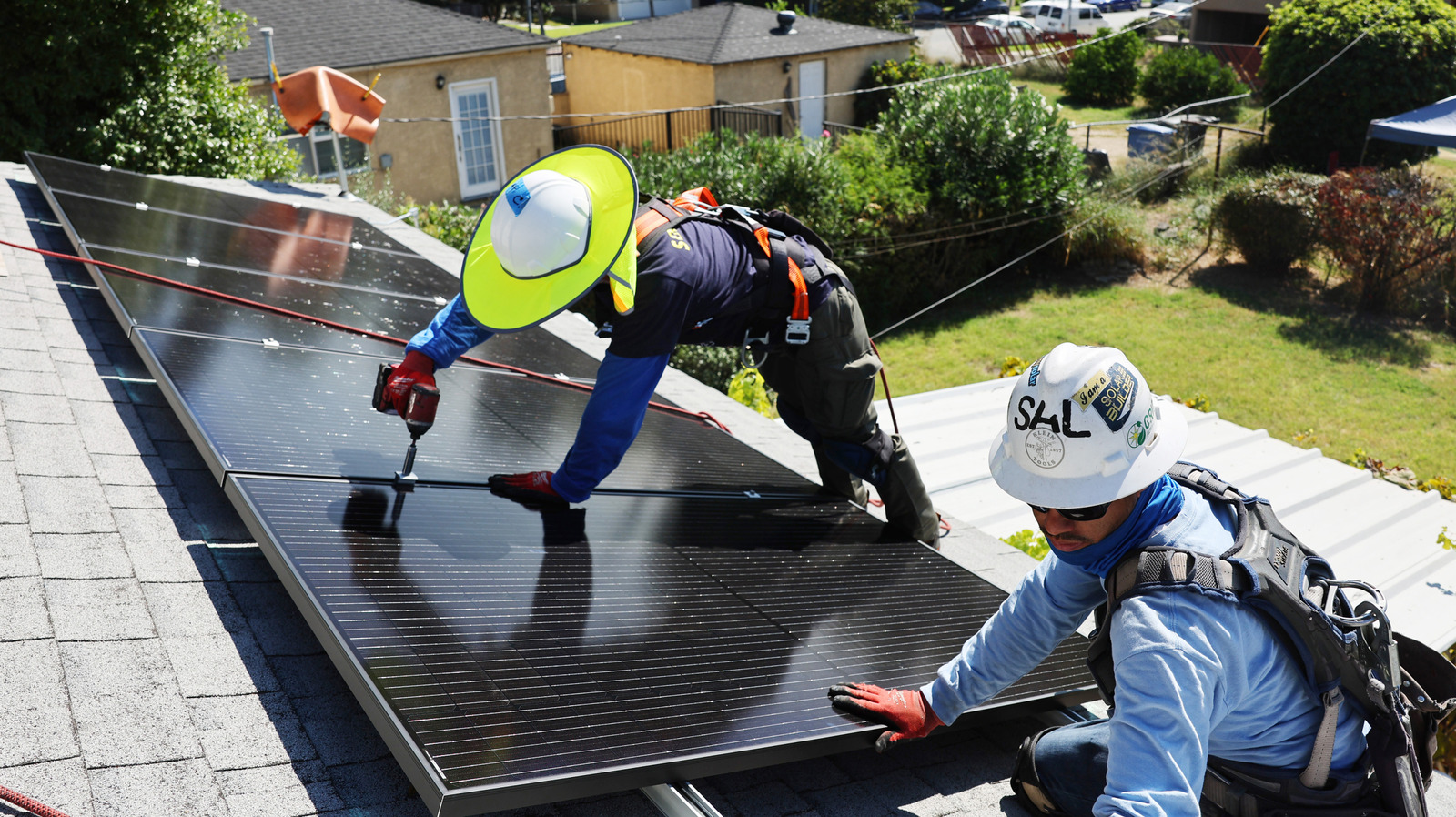
The 33 percent rule gives you a good framework for estimating how much power you will produce with solar panels. When thinking about an installation, a good, free first step is to plot the position of the access pathways and ridge setbacks on your roof before choosing any panels.
The exercise will show you how much roof space is available for panels, giving you an accurate idea of how many will fit and how much energy they may provide. That information should also help you make other decisions about how to deploy solar panels on your property. If you are working with limited space, you may opt for more expensive, high-efficiency panels that can capture more energy per square foot, while a large roof may be better suited to cheaper, lower-efficiency panels.
If you are working toward a target energy output, you should also consider the 20 percent rule for solar energy setups, a rule of thumb that recommends you size your system to produce 20 percent more than your household typically uses.
Once you determine how much available space you have and what efficiency your solar panels will provide, you can make a more accurate estimate of how much power you should expect your panels to deliver. Along with estimates of panel degradation and replacement, this information should show whether the project makes financial sense.